The Dependables
The gray-haired "club-sandwich" generation pulls together through the worst

The Dependables
[** first a note. I refer to sister/cousins several times in this essay. In our extended family, we are so loaded and blessed with close women cousins that we tend to classify our cousins as sisters.]
When it comes to health, my clan is an ordinary American family marked by garden-variety cardiac disease, auto immune disorders, unhealthy habits, and rudimentary health care.
Our preferred form of medical treatment seems to involve a combination of denial and sarcasm.
Given these contributing factors, in my youth, back in the day, all the old people in my life had the good sense to die relatively young.
I have almost no memories of my maternal grandparents, who lived very nearby and who died in perfect sync with Census data showing the average lifespan of an American in the 1960’s (67 years for men, 73 years for women).
Fortunately for me, I do hold one great specific memory of my grandfather. This involved him doing a magic trick by making a walnut disappear. He died when I was four, and I’m still wondering where that nut went.
Otherwise, I know my grandparents only through photographs and other people’s stories.
I have no memories at all of my nearby maternal grandparents’ final illnesses and deaths, and no direct knowledge of any extended hands-on care they might have received from any of their four daughters — my mother and her three sisters.
Now I’m nearing the age my grandparents were when they died, and – rather than crafting some sort of plan for the rest of my own life -- this entire phase is all about hands-on caregiving, caretaking, loss and grief.
And it’s not just me. Every single woman I know in my age group is taking care of at least one elder loved-one.
This is THE story of our lives right now.
(I’m certain that men do this kind of hands-on caregiving, too – but frankly, I don’t know any men who do.)
At the age we are now, our own parents, in their orphaned state, might have been experiencing something called “retirement,” where they relocated to a warm place, drove an RV across the country, took lots of cruises, and doted on their grandchildren.
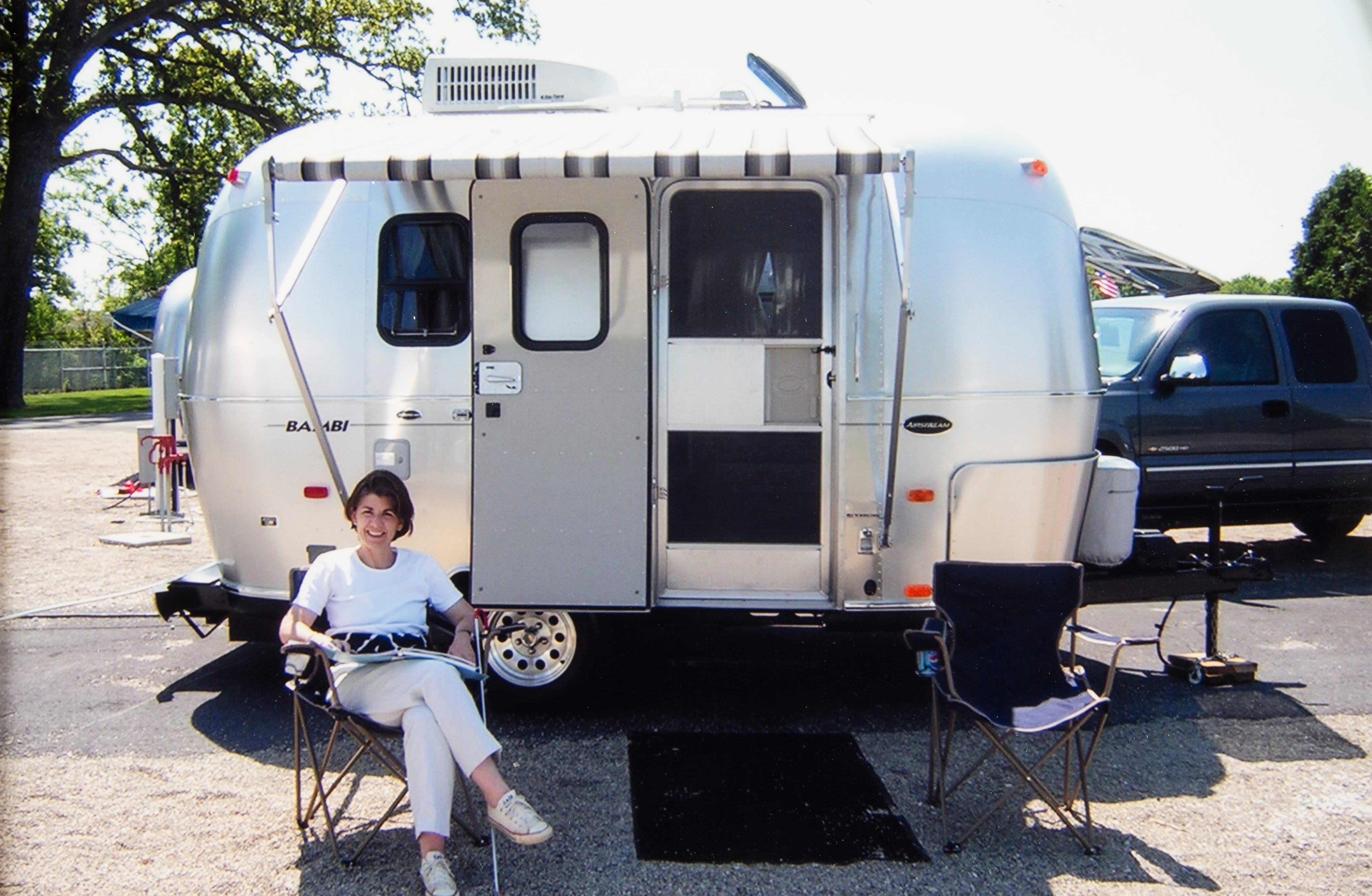
[Amy, enjoying a brief preview of the retirement she’ll never have ..]
But our elders are hanging on for much longer than the previous norm. They’ve enjoyed 20 years of retirement and are now living well-deserved lives into their 90’s and beyond -- with the benefit of healthier habits and more consistent health care.
We late-boomers (those of us bringing up the back end of the Boomer demographic) are not the “sandwich generation …” we are the gray-haired club sandwich generation, because we have three layers of people to worry over and provide care for: Our parents, sometimes our spouses or partners, our adult children, and our grandchildren.
My own close family of sisters and sister/cousins has experienced an unexpected cluster of people who’ve needed us to shepherd them toward the end of their life’s journey.
Unfortunately, as a group, I would describe my family of women as “not at all like a group.”
My mother and her three sisters raised their daughters to be like they were: strong, opinionated, independent, and … individual. [And … in my case, HILARIOUS.]
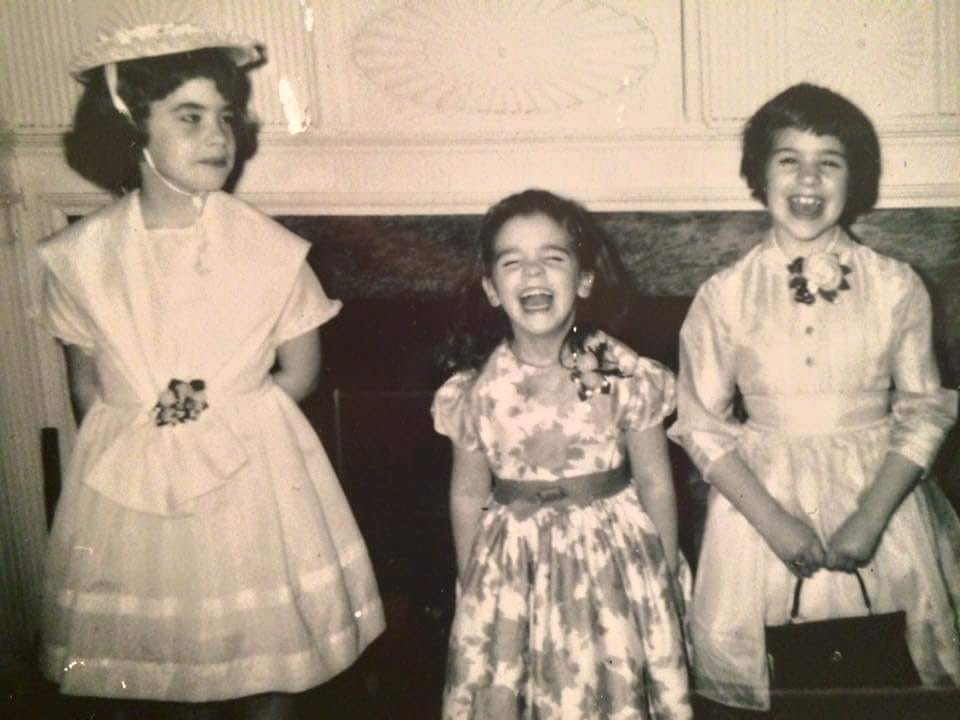
[Future Dependables: Rachel, Amy, Anne]
My two sisters and I, along with our large group of close sister/cousins*, have been locked in a lifelong geometry of shifting alliances, long silences, lengthy distances, loving moments and respectful competition.
Our collective mothers were skilled boundary builders who conducted their personal lives behind an opaque privacy screen.
But I’ve always felt that our generation’s boundaries have been a little too high. We are not the hand-holding confidence-sharing talk-every-day-on-the-phone tribe of sisters as portrayed in popular media.
Dang, I’ve always wanted that. But while our dynamic has always been mutually supportive, it’s also been a little bit … spikey.
[When I was a kid I dreamt of being in a sister-act. I’ve always loved the Lennon Sisters and this number is a REAL HONEY.]
I have often wondered what would happen if my sisters and I were forced into a common predicament and were compelled to work together. We got some practice at this at the end of our mother’s life, when we all stepped in and stepped up – but still, we did this separately and each in her own way.
This current cluster of unexpected emergencies started several months ago.
We who live locally responded as the individuals we are – pitching in here and there, taking someone to a doctor’s appointment or to buy groceries.
Then things ramped up extremely quickly, and we three who live in town (my sister and I, and our sister/cousin) started pitching in more often, until we were providing 24/7 care in the home of two older sister/cousins who didn’t have children of their own.
We held emergency Zoom “team” meetings with our sister in Maine, strategizing about how to patch things together, but for several weeks it was just three of us who live in town (our average age: 70) trying to keep our elder family members safe during one of the most brutal winters in memory — while we tried to figure out what else to do.
We developed our own spheres of competence. I started spending nights at our elders’ house, in part because I am a life-long insomniac and am used to running on fumes. My sister took a lot of day shifts, which came with their own set of tremendous challenges, and our cousin, who holds a leadership position in this particular system – ran the show as Power of Attorney and health care proxy, did a lot of night and weekend shifts at the house, and continues to work full-time. (She’s 75, by the way.)
Our group motto has been: “This is not sustainable.” And yet we’ve kept going.
Many of our group communications seem to revolve around Depends. We launch lengthy text chains devoted to who has a package of Depends in her car, who is buying them before her shift, and how many are left in the upstairs bathroom.

We also trade anecdotes about the process of purchasing this product at our local small drug store, joking that as we gray haired women struggle to the cash register with a jumbo package of Depends, surely the clerk must wonder if we are buying them for ourselves.
Eventually, two additional sister/cousins who live hundreds of miles away discerned the need and the burden and jumped onto planes without being asked. They moved into our elders’ household in the middle of a blizzard, giving our trio of exhausted caregivers an important break of a few days.
Our sister in Maine drove many hours through the latest blizzard and also moved in, taking as many shifts as she could during the weeks she was in town.
And guess what? We got sort of good at it. We had to.
And I can’t help but notice that over time our caretaking has become caregiving.
We are women who put all of our own personal issues and interests, marriages and families on hold, indefinitely. Without being asked or assigned, we showed up when we were needed. We’ve dispensed medication, made phone calls, toured nursing care facilities, gone through paperwork, wrestled with appointments and insurance. We’ve done the grocery shopping, made the appointments, raced to the ER, gotten up during the night to deliver a glass of water, learned to hide the remote and police the stove, helped to undress, dress, find matching socks, and kept vigil over the exits to try and protect our loved one who has started wandering.
I’ve come to think of us as:
The Dependables.
This experience has, without question, brought out the best in all of us. What started out as dutiful caregiving has transformed into lovingkindness. We communicate better, and much more often. We bring each other coffee and treats, laugh at our occasional incompetence and take turns having breakdowns. We are more patient, forgiving and tolerant of our different styles than we used to be.
Every single day during this period, I’ve thought so often about the many family caregivers I know who have done this — not for months, the way we have, but for years.
Bless you all.
This period of our family’s life is drawing to a close, because – as all caregivers know – the only way this phase of life ends is through loss.
As our family moves through this next season of loss and grieving, I hope that we Dependables will be able to turn our attention elsewhere, but that we’ll also continue to take good care, both of ourselves and of each other.
Now that we know how to do it, I’m convinced that we will.
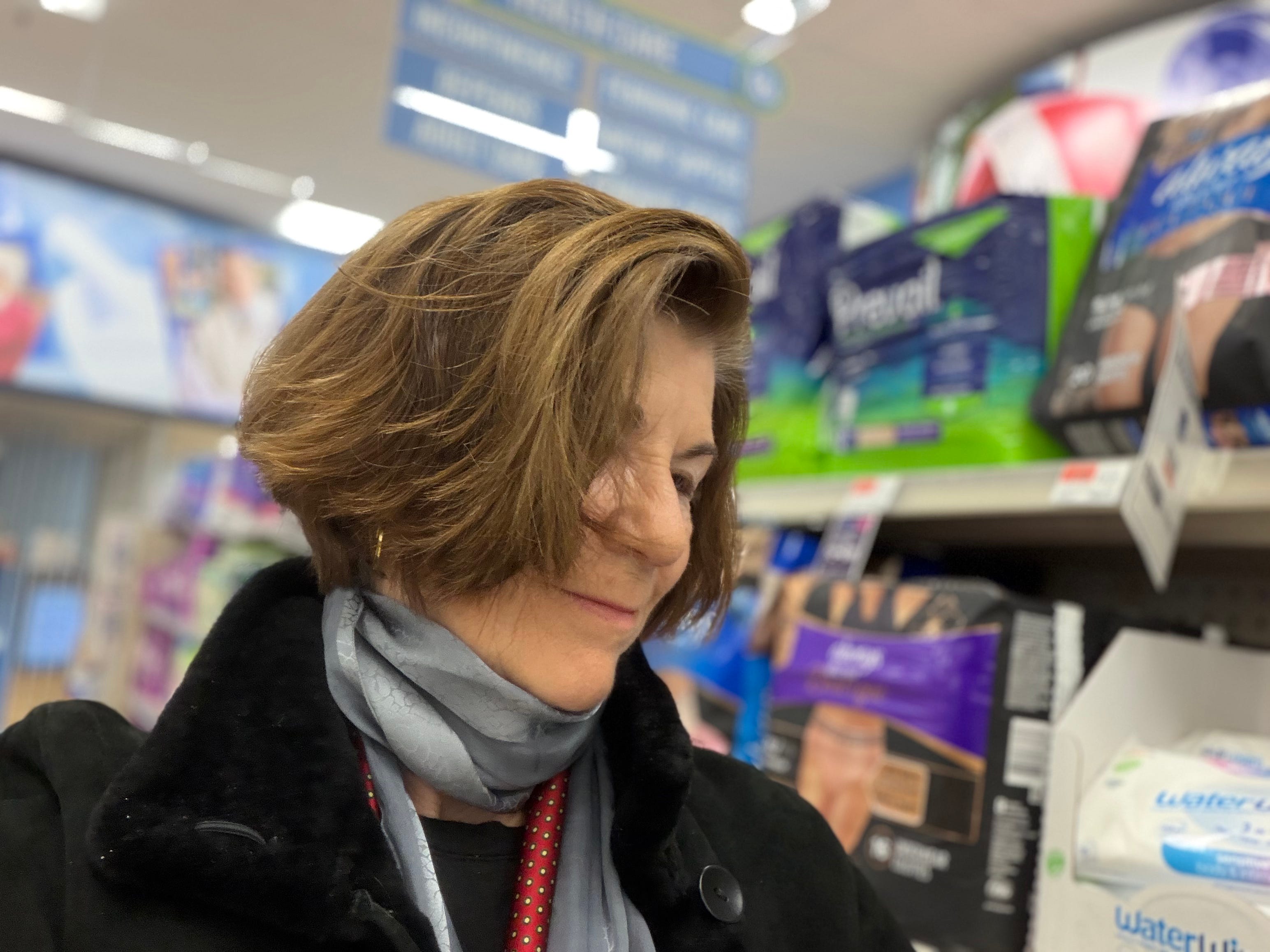
[pondering my options in the Depends aisle]
Care to commiserate? Hit me up in the comments section.
Love,
Amy
Bonus: Above: A short walk down Main Street at midnight.
As one of the founding members of the dependable mod-squad - and one of the crying sisters - I love everything you have written here, sister.
This might be helpful for caregivers--I am a nurse and there wasn't anything I couldn't do for a patient. BUT --I had to care for my parents when they were dying and I never thought I could provide that same kind of care for them. But, when you have to do it, you just do it. It was surprising-- protecting dignity isn't as hard as you might imagine. When someone is incredibly ill, their mind about that issue isn't the same. It is a little uncomfortable, but the efforts you make that indicate you are repectful (a towel covering, or some other minor adjustments-- looking away, being matter of fact) those efforts seem to be "enough."